
Better margins, lower interest outgo could see the company turn profitable in FY15.

Of the 1,145 offers made this year, consulting firms made up 34 per cent, followed by banking, financial services and insurance, pharma/healthcare, IT/ITeS and FMCG/retail.

Axis Bank was the top loser in the Sensex pack, shedding over 4 per cent, followed by Asian Paints, SBI, IndusInd Bank, ICICI Bank, Bajaj Finance, HDFC and Reliance. On the other hand, Bajaj Auto, Hindustan Unilever, UltraTech Cement, TCS, Bajaj Finserv and Infosys were the gainers.

The CBI has filed a fresh case against absconding diamantaire Mehul Choksi, wanted along with his nephew Nirav Modi in a loan fraud case of Rs 13,500 crore, for allegedly inflating the value of diamonds and jewellery pledged to get Rs 25 crore loan from IFCI, officials said on Monday. The CBI has booked Mehul Choksi, his company Gitanjali Gems and valuers Surajmal Lallu Bhai and Co, Narendra Jhaveri, Pradip C Shah and Shrenik Shah, they said. The central agency has acted on a complaint from Industrial Finance Corporation of India (IFCI) Ltd alleging that Choksi had approached it in 2016 seeking Rs 25 crore working capital loan for which he had pledged shares and gold and diamond jewellery.

Omkeshwar Singh, Head, Rank MF, a mutual fund investment platform, answers your queries.

Omkeshwar Singh, Head, Rank MF, a mutual fund investment platform, will answer your queries.

Morgan Stanley removed banking stocks from its model portfolio when it slashed its weighting on the sector by 500 basis points. Several foreign brokerages, such as UBS, JP Morgan, and Credit Suisse, of late, have also become less optimistic about banking stocks.
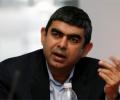
Infosys: Sikka magic may revive double-digit revenue growth

Omkeshwar Singh, Head, Rank MF, a mutual fund investment platform, answers your queries.

Sensex rally was driven by Bajaj FinServ, Reliance Industries, Bajaj Finance, ICICI Bank, HDFC and Axis Bank. NSE Nifty climbed 326.50 points to end at 15,245.60.

Will the rupee keep falling in value against the US dollar? What will be its impact?

While slow execution and delays in infrastructure projects have led to a payment crisis as recovery of dues is a big challenge, banks are breathing down their necks for loan repayment.
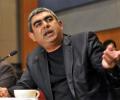
Company feels automation is a big tool to drive down costs and improve efficiency

Equity benchmark Sensex rebounded 454 points on Thursday, boosted by gains in index heavyweight Reliance Industries amid a positive trend in global markets.

'Making money in such markets is typically harder and investors need to put in considerable effort to identify stock ideas over the year.'

The mercury in Delhi, which recorded its hottest day of the year so far at 45.6 degrees Celsius on Sunday, came down to 42.4 degrees Celsius, according to the India meteorological department.

ICICI Bank was the top gainer in the Sensex pack, rising around 3 per cent, followed by Axis Bank, HDFC twins, SBI, L&T, ONGC and Infosys. On the other hand, Sun Pharma, Asian Paints, Nestle India, UltraTech Cement and HUL declined. NSE Nifty rose by 79.60 points or 0.67 per cent to 11,914.20.

A proposed 24 percent hike in the salaries of 2.6 million employees and pensioners, will land the railways with a wage bill of about $4.7 billion.
Omkeshwar Singh, Head, Rank MF, a mutual fund investment platform, answers your queries.
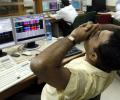
'The correction could take two to three months and traders need to be careful.' 'For investors, this could be a good time to nibble in.'

L&T was the top loser in the Sensex pack, dropping 4.99 per cent, after the engineering major posted a 45 per cent decline in consolidated net profit for the September quarter. Titan, ONGC, Axis Bank, HUL, NTPC, M&M and HDFC were the other major laggards, shedding up to 3.32 per cent. NSE Nifty fell 58.80 points or 0.50 per cent to 11,670.80.
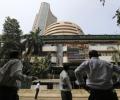
Yes Bank was the top gainer in the Sensex pack rising 5.80 per cent, followed by Tata Motors, ICICI Bank, IndusInd Bank, Axis Bank, Kotak Bank and Tata Steel.

Brent crude prices fell to $57 a barrel on Monday from $62 a barrel.

ICICI MF recently filed for an ETF that will track the Nifty Alpha Low-Volatility 30 Index. It is part of the suite of smart-beta indices with the NSE, with the portfolio designed using a combination of two factors.

are in the process of building one at the Jio Center in Bandra Kurla Complex where the Maker Maxity building used to be. "This theatre will be on the top of the mall and should be able to accommodate 300 cars, and is expected to open sometime in January or February next year.

'Nehru's inability to take religion seriously as a category led to serious errors of judgement in his dealings with the Muslim League, and later, also with the Hindu right.'

Banking technology start-up Zeta is the latest entrant to the unicorn club after raising $250 million in its Series C round from SoftBank Vision Fund 2. Sodexo participated as an additional minority investor in the round. Founded by serial entrepreneur and billionaire Bhavin Thurakia, the startup is now valued at $1.4 billion. It is the 14th company this year to cross the $1 billion valuation mark after Meesho, Cred, Pharmeasy, ShareChat, Moglix and others.

Ajit Mishra, vice president, Research, Religare Broking, answers your queries.

Top gainers in the Sensex pack included HCL Tech, Tata Motors, M&M, Bajaj Auto, RIL, Hero MotoCorp, Yes Bank, Maruti, HDFC Bank and Bajaj Finance, which surged up to 6.43 per cent.

Even if some of those projects remain on paper, the potential for manufacturers and engineering firms is too big to ignore

Is the worst over for Indian banks? The past two years saw them ride on treasury trades as deposits soared and credit growth dipped sharply. Gross and net non-performing assets (NPAs) moved south, and the provision coverage ratio (PCR), capital buffers, and profitability indicators are back at pre-pandemic levels. So, what's the plot ahead?
'Four weeks have passed after the scam was exposed, yet no big guy has been arrested.' 'This gives the impression that he wants to be soft on the biggies.'

Vodafone and Bharti have pointed out that, for data, their revenue realisation should be at Rs 30-35 per GB for them to cover their costs as opposed to the current figure of over Rs 11 per GB. But Jio has suggested a gradual increase to Rs 15 per GB and then maybe to Rs 20 per GB after six to nine months.
The other board members will be Sunil Mehta, former non-executive chairman of Punjab National Bank, as the non executive chairman of Yes Bank, Mahesh Krishnamurthy and Atul Bheda as non-executive directors.

That's the only way to convince those who have money to return to the bank fold, ditching other asset classes, says Tamal Bandyopadhyay.

Equity benchmarks Sensex and Nifty ended marginally lower on Tuesday as investors booked profits at higher levels amid a mixed trend in global markets.

Telcos have indicated that rates will have to be raised, as higher volumes alone will not suffice to meet the higher costs.

Kotak Bank was the top laggard in the Sensex pack, shedding over 2 per cent, followed by ITC, PowerGrid, M&M, HDFC, Asian Paints and NTPC. On the other hand, Maruti rallied over 4 per cent. Bharti Airtel, Axis Bank, IndusInd Bank and Bajaj Finance were also among the gainers.
Budget 2015 has blessed the banking sector.

Investment guru and mutual fund expert Ashok Kumar, answers all your MF related queries.
